Ladakh’s distances are only part of the challenge. Altitude, long pass crossings and basic facilities outside Leh make pacing important. For a first trip, six or seven nights is a useful minimum after arriving in Leh.
A sensible seven-day circuit
Days 1–2: Leh and acclimatisation
Rest on arrival. Keep walking gentle and avoid driving to a higher pass immediately. The second day can include nearby monasteries or a short local circuit if everyone feels well.
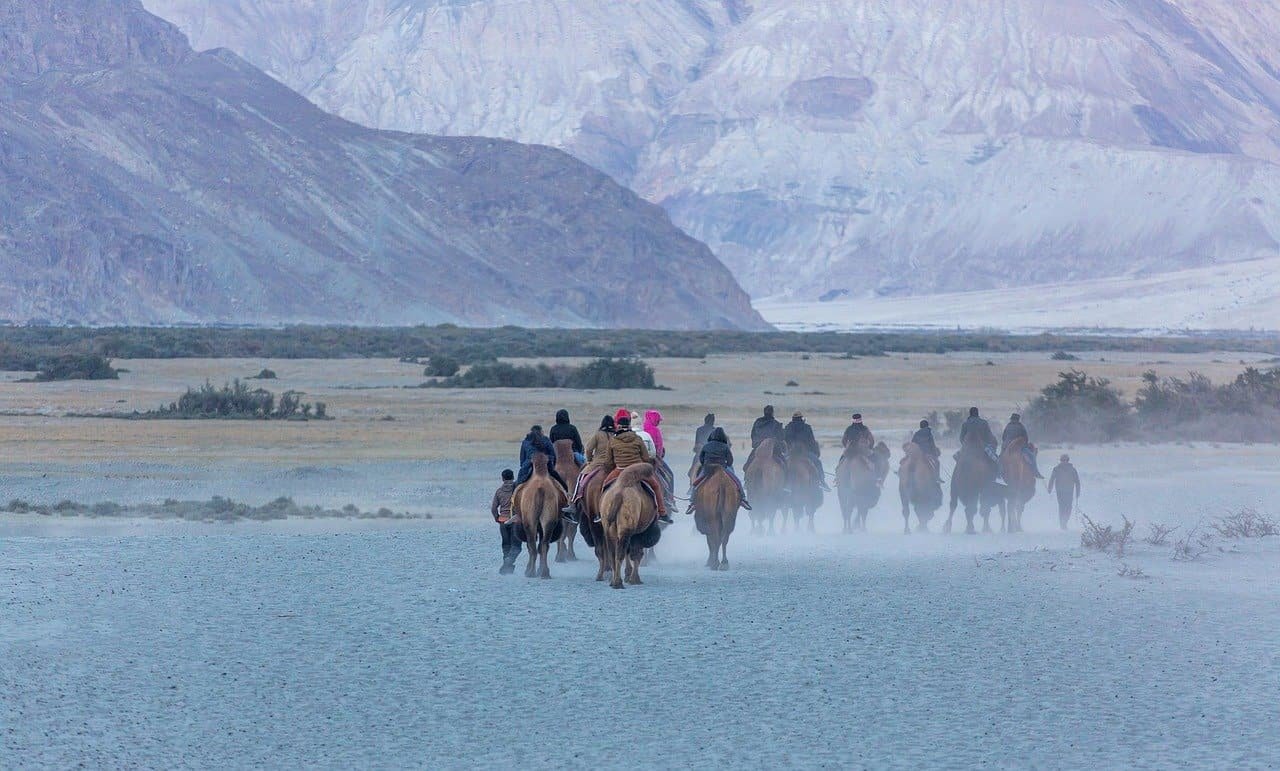
Days 3–4: Nubra Valley
Cross toward Nubra after acclimatisation. An overnight allows time for Diskit, Hunder and the valley’s villages without compressing the drive into a rushed day trip.
Day 5: Nubra to Pangong
Route conditions can change, so confirm the current road choice locally. Pangong is cold and exposed even in summer; choose accommodation for warmth and reliability rather than views alone.
Days 6–7: Return to Leh
Return with enough daylight and keep the final day as a buffer or local sightseeing day. Avoid placing an important flight immediately after a remote-road transfer.
Permits, vehicles and package comparisons
Protected-area routes commonly require permits and identity documents. Requirements can change, so verify them near the travel date. When comparing vehicles, prioritise an experienced mountain driver, condition of the vehicle and clear inclusions.
Travellers who want transport, stays and permits coordinated together can compare Ladakh tour packages. Check whether the itinerary preserves two acclimatisation nights and whether Pangong and Nubra accommodation names are specified.
Arriving overland from Kashmir
The Srinagar route rises more gradually than flying directly to Leh and includes a practical Kargil overnight, but it does not remove altitude risk. Read our Srinagar to Leh road-trip guide and compare dedicated Srinagar–Leh taxi information before deciding between a direct transfer and a sightseeing journey.